

When Hollywood Goes AI

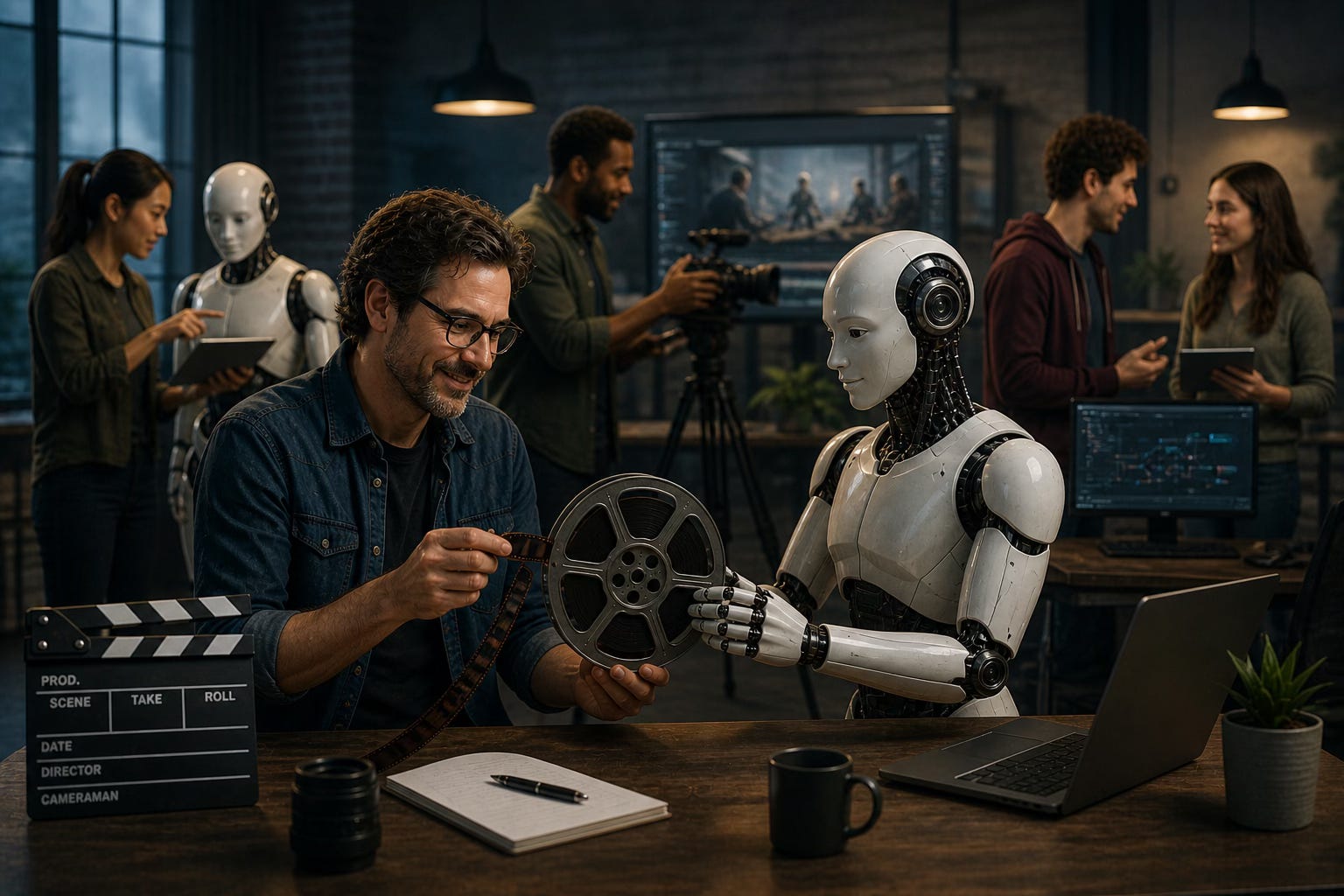
I recently came across an article raising concerns about AI replacing actors and reshaping the entertainment industry. It framed the issue as a kind of ethical turning point.
Like often happens with me, it made me start to wonder.
And as I wondered, I began to think the question may be broader than it first appeared.
One line from the article stood out to me:
“If Hollywood, a place that literally sells human emotion, is testing synthetic replacements, then no sector is safe from this conversation.”
That’s exactly right.
No sector is safe from this conversation.
And that’s precisely why the entertainment industry will be no different.
AI will affect jobs of all kinds, industries and services. Why shouldn’t it affect the entertainment industry as well?
When I watch a movie or TV show, or listen to music, or look at art, I want to experience what entertains me most.
I don’t really care if it was written, produced, or performed by humans or AI. What matters is the result.
Many jobs are going to become unavailable and no longer be performed by humans.
But this isn’t new.
Throughout history, new inventions and technologies have reshaped the workforce.
Some jobs disappear. Others get created. Entire industries are transformed.
The introduction of AI may be one of the most disruptive events we’ve ever seen.
And now that it’s here, it’s not going away.
There will always be resistance at first. People in established positions will push back, trying to preserve what exists. That’s natural.
But over time, perspectives change, people adapt.
If there’s one thing humans have proven from the beginning, it’s their adaptability.
New generations will grow up with the technology, understand it differently, and begin to shape how it’s used.
We’ve seen this pattern before.
Every major technological shift changes what people value, what they pay for, and what kinds of work survive. Some people may still prefer human-made films, music, and art, and there will be a place for that, but it will likely decline.
Others, especially those previously mentioned young people who grow up with AI, will likely prefer AI-created entertainment if it interests them or simply holds their attention. They won’t feel the same ties to human-made creative work that older generations may feel, and it will be easier for them to let those ties go.
So the question may not be whether AI should affect creative work.
It already is.
The better question may be how we adapt to that reality, and whether we can do it in a way that still leaves room for human creativity.
This was written after reading and thinking about an article by Cristina,
“Hollywood’s First AI Actress Isn’t Human, But Her Impact Will Be.”
Want more?
The (Unexpected) Future of AI
Thank you for the shout out and for writing this.